
A commercial concrete slab is one of the most demanding pours in the construction industry. It has to support heavy equipment, constant vehicle traffic, and the weight of inventory, shelving, and machinery day after day. In Des Moines, commercial slabs also have to hold up through Iowa's extreme seasonal temperature swings. A slab that shifts, cracks, or develops surface problems creates real disruptions for a business. Downtime for repairs, tripping hazards for employees and customers, and equipment damage from uneven floors all carry high costs. DSM Concrete Pros pours commercial concrete slabs throughout the Des Moines metro built to perform under those demands from day one.
What Sets Commercial Slabs Apart from Residential Work
Commercial concrete slabs operate under conditions that residential flatwork does not face. The loads are heavier, the traffic is more frequent, and the consequences of a slab failure are far more disruptive. A cracked patio at a home is an inconvenience. A cracked warehouse floor that causes a forklift to bounce or a pallet rack to sit unevenly is a safety issue and a liability.
Commercial slabs also cover much larger areas than residential pours. Large surface areas mean more opportunities for shrinkage cracking, uneven settlement, and drainage problems if the installation is not carefully planned. The control joint layout on a commercial slab requires real planning, not just a few cuts made after the fact.
In Des Moines, commercial properties that connect to outdoor areas also see the same freeze-thaw stress that affects all exterior concrete. Loading docks, aprons, exterior slabs, and areas near overhead doors experience temperature cycling that interior-only slabs do not. DSM Concrete Pros accounts for these transition zones when planning and pouring commercial work.
Free No Obligation Estimate
Send us what you are working on and we will get you a quote quickly and efficiently!
Commercial Slab Design: Thickness, Mix, and Reinforcement
The three most important decisions in any commercial slab project are thickness, concrete mix, and reinforcement. Getting all three right for the intended use is what separates a slab that lasts decades from one that needs major repairs within a few years.
Slab thickness is determined by the loads the slab needs to carry. A retail showroom floor with foot traffic and light displays needs less thickness than a warehouse floor that carries loaded forklifts and pallet racking. DSM Concrete Pros evaluates the intended use of each slab before recommending a thickness. Standard commercial slabs typically run five to six inches. Heavy industrial applications often require six to eight inches or more. Pouring a slab thinner than the load demands is one of the most common causes of premature failure in commercial work.
Concrete mix design affects strength, durability, and how the slab behaves over time. A higher compressive strength mix handles heavier loads and resists surface wear better than a standard residential mix. For commercial slabs in Des Moines that connect to exterior areas, we use mixes with air entrainment to handle freeze-thaw cycling. We also control the water-to-cement ratio carefully. Excess water in the mix weakens the finished slab and increases long-term shrinkage.
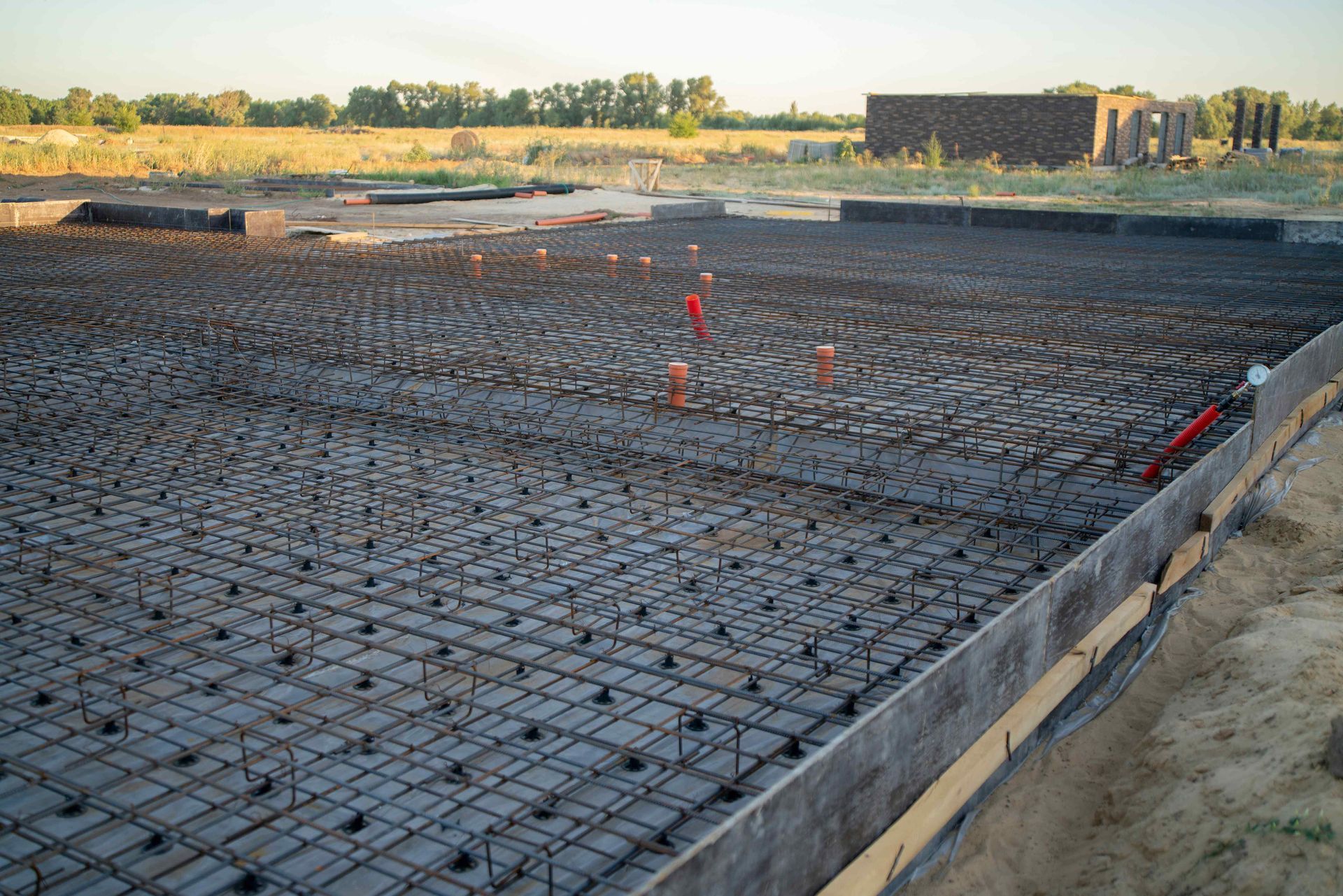
Reinforcement is an important aspect of every commercial slab that DSM Concrete Pros pours. Rebar or welded wire reinforcement adds tensile strength that concrete alone does not have. Concrete handles compressive loads well but is vulnerable to tension and flexing. Reinforcement holds the slab together when loads cause it to flex and when temperature changes cause it to expand and contract. The size and spacing of reinforcement depend on the slab thickness and the load requirements of the application.
Sub-Base Preparation for Commercial Concrete in Iowa
Think of the sub-base as the solid ground that holds up your concrete. No matter how well the concrete itself is mixed and poured, a poorly prepared sub-base leads to slab failure. Good finishing helps a patio last. For a busy loading dock, that extra durability is a total necessity.
DSM Concrete Pros removes and replaces any soft, organic, or unstable soil before compacting the sub-base material. Des Moines is full of heavy clay that shifts constantly, ruining foundation support. Clay swells up as it gets soaked and shrinks back down once it loses moisture. Shifting weight passes from the base right into the top slab. You need a firm foundation made of drainage rock. Packing this material down tight prevents the surface from buckling when moisture hits the soil.
We measure the sub-base and pack it down tight before any framing goes into the dirt. Uneven sub-base depth leads to weak spots. These gaps in support trigger differential settlement, which pulls your project apart over time. That kind of settlement causes the slab to crack and slope in ways that are difficult and expensive to correct after the fact. Doing the sub-base work right the first time is far less costly than fixing the slab problems that follow a poor sub-base.
Control Joints and Floor Flatness on Commercial Slabs
Control joints are planned cuts in the slab that guide where cracking occurs as the concrete cures and moves over time. Every large concrete slab will experience some cracking as it shrinks during curing. The goal is not to prevent all cracking — that is not achievable. The goal is to control where cracks form so they occur along straight, planned lines rather than random fractures across the floor.
On commercial slabs, control joint layout is a deliberate part of the project plan. Joint spacing depends on slab thickness, the concrete mix, and the environment the slab sits in. Joints placed too far apart allow more uncontrolled cracking between them. DSM Concrete Pros plans joint layouts before the pour and cuts joints at the right depth and spacing for each project.
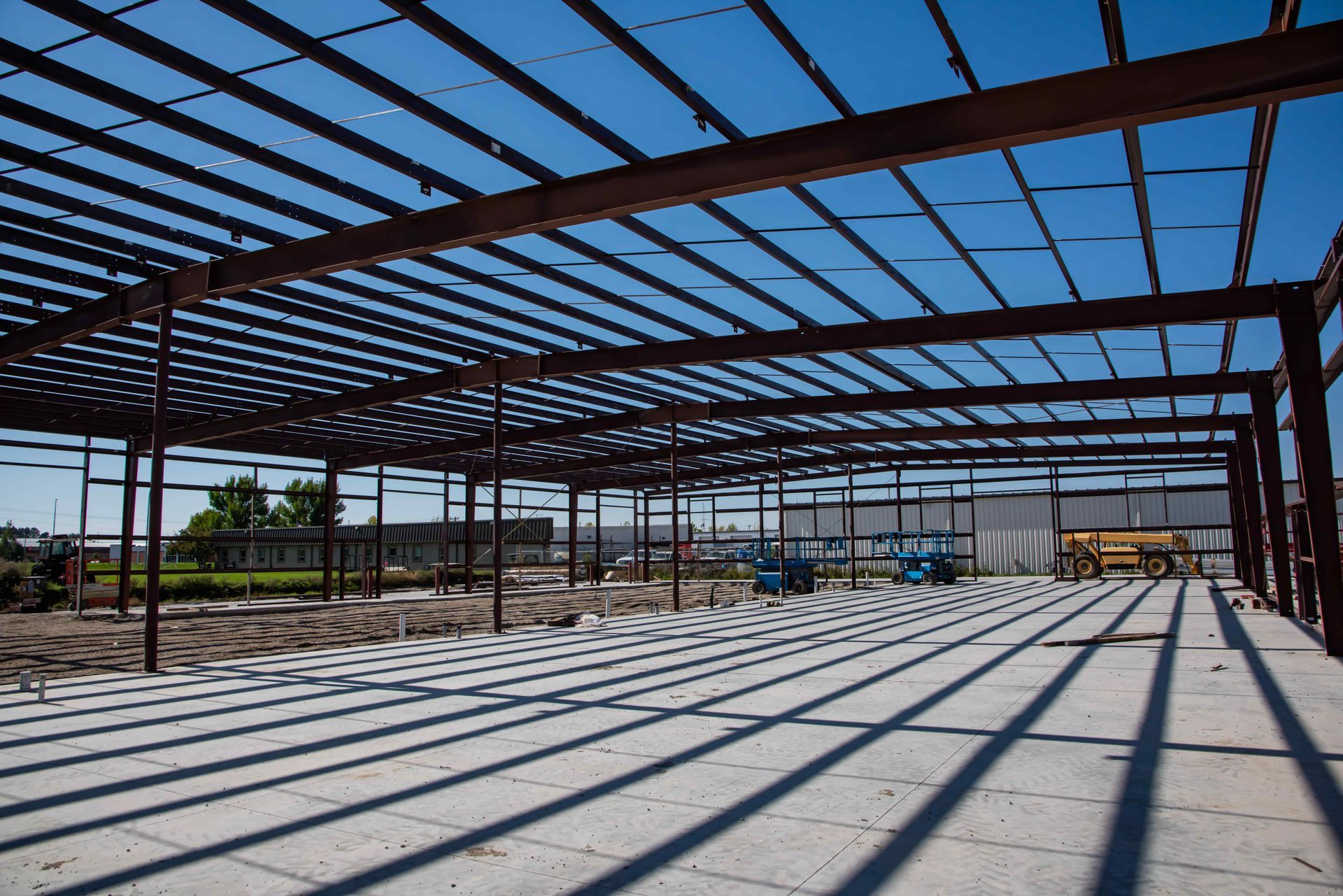
Floor flatness matters significantly in commercial applications. Warehouses that use narrow-aisle forklifts have strict flatness tolerances because uneven floors affect stability and load capacity. Retail floors and showrooms need consistent flatness for shelving, displays, and customer safety. DSM Concrete Pros finishes commercial slabs to the flatness specification required for each application and uses laser-guided screeding equipment on large pours to maintain consistent elevation across the full slab surface.
Get a Free Commercial Concrete Slab Estimate in Des Moines
DSM Concrete Pros pours commercial concrete slabs for warehouses, retail spaces, industrial facilities, shop floors, and more throughout the Des Moines metro. Call us today or fill out the contact form to schedule a free on-site estimate. We will review the site conditions, discuss your load requirements, and provide a clear and detailed price before any work begins.